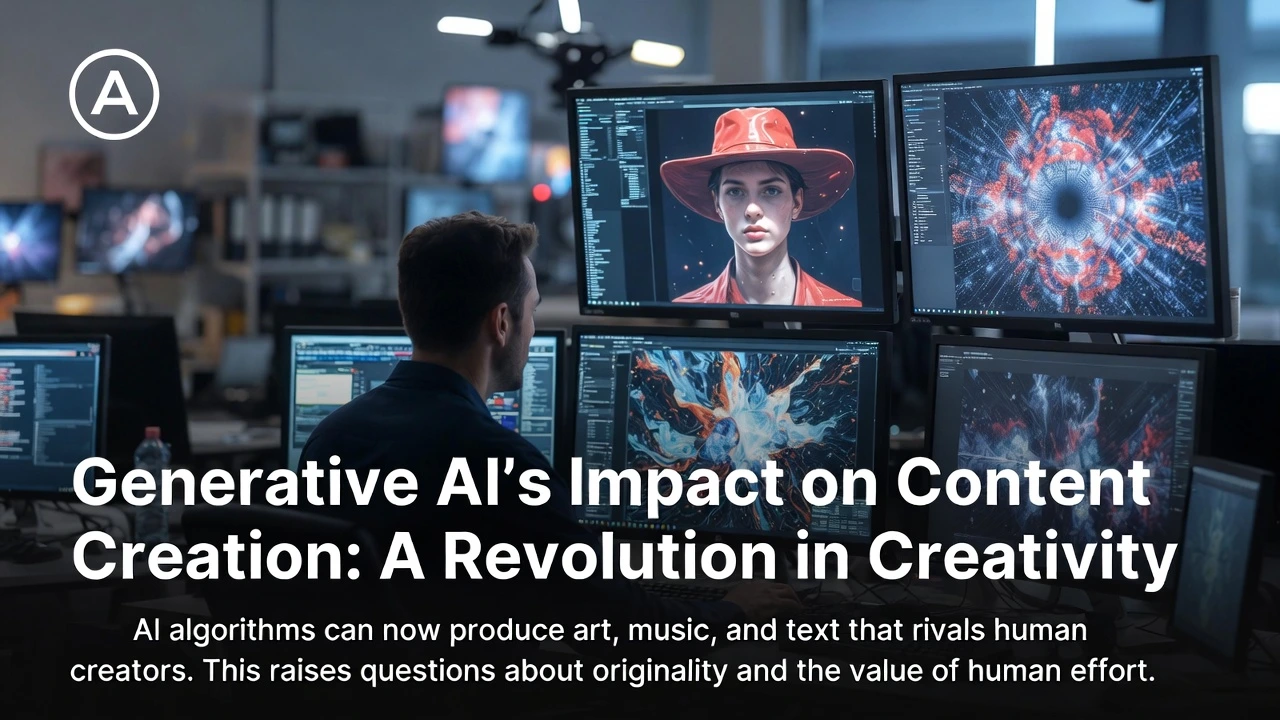
What is Generative AI's Impact on Content Creation?
The world of technology is constantly shifting, and staying on top of these changes can feel like a race against time. Think about how quickly smartphones evolved from basic communication devices to pocket-sized computers that manage our finances, health, and social lives. This rapid evolution means that technologies once considered futuristic are now deeply integrated into our daily routines. Understanding these shifts isn’t just for tech enthusiasts; it’s becoming essential for everyone to navigate the modern world effectively.
This article delves into some of the most impactful technology trends shaping our lives in 2026 and beyond. We’ll explore what these trends mean for you, how they are already changing specific aspects of your day, and most importantly, practical ways to adapt and thrive in this dynamic technological landscape. We aim to provide a clear, balanced view, focusing on real-world impacts and actionable advice for everyday people, helping you harness the benefits while navigating the challenges.
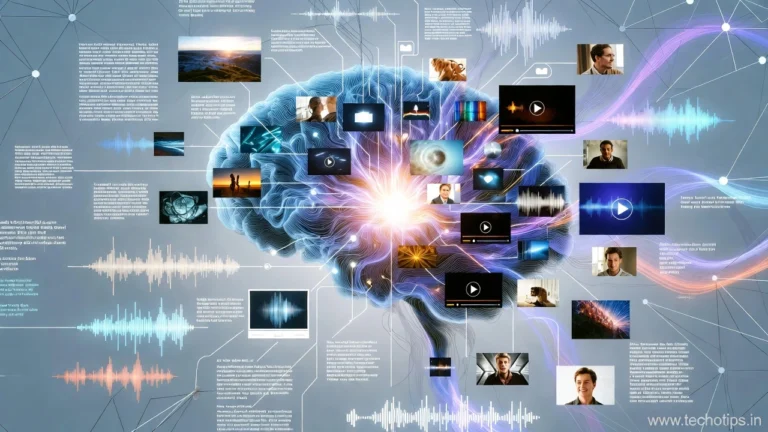
Generative Artificial Intelligence, often shortened to Generative AI, refers to a type of AI that can create new content. This isn’t just about generating text; it extends to images, music, code, and even videos. Think of it like having a creative assistant that can brainstorm ideas, draft initial content, or even produce entire pieces based on your prompts. Unlike older AI systems that could only analyze existing data, generative AI can produce something entirely novel. This capability is exploding now because advancements in machine learning, particularly in areas like large language models and diffusion models, have made these tools much more powerful and accessible.
Key technologies involved include sophisticated algorithms trained on massive datasets. For example, tools like ChatGPT are built on large language models that have read a significant portion of the internet. Image generators like Midjourney or DALL-E use diffusion models that learn to create images by progressively removing noise from random patterns. The result is AI that can understand complex human instructions and translate them into creative outputs.

Why This Trend Matters to Regular People
For most people, Generative AI’s impact isn’t about understanding the underlying code but about experiencing its effects. You’ve likely already encountered it, perhaps without realizing it. Search engines are beginning to integrate AI-generated summaries, your email might suggest replies, and social media feeds could be influenced by AI-generated content. This trend matters because it fundamentally changes how information is created, consumed, and disseminated. It affects students researching for essays, professionals drafting reports, artists seeking inspiration, and even hobbyists looking to create something unique.
The timeline of impact is already here. While sophisticated applications are still developing, many AI-powered content creation tools are readily available, and their usage is growing exponentially. This means the changes are happening now, affecting how we work, learn, and interact with digital information on a daily basis. The scale of change is significant, potentially altering entire industries and the skills valued in the workforce. [Generative AI’s Impact on Content Creation
How Generative AI Is Changing Creative Workflows
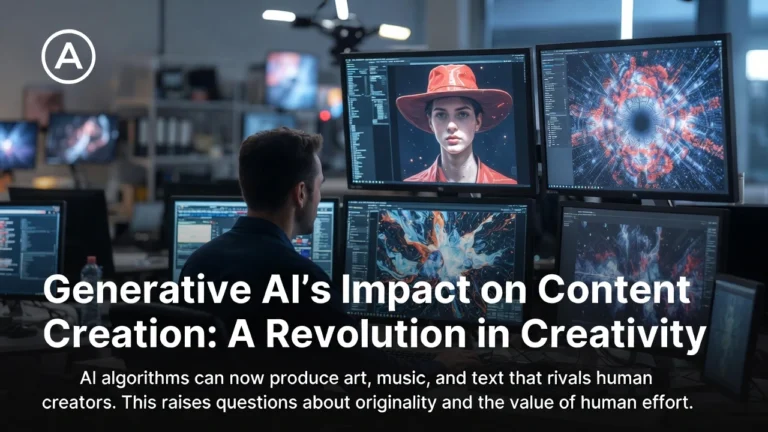
The most immediate area where Generative AI is making waves is in creative workflows. For writers, it can act as a brainstorming partner, help overcome writer’s block, or even draft initial versions of articles, marketing copy, or social media posts. Instead of staring at a blank page, a writer can prompt an AI to generate several different angles or outlines for a story. This frees up more time for editing, refining, and adding that human touch that makes content unique and engaging.
For graphic designers and artists, AI image generators can produce concept art, mood boards, or even final assets much faster than traditional methods. A designer can describe a scene or style, and the AI can generate multiple visual interpretations in minutes. This accelerates the ideation process and can lead to more diverse creative possibilities. Similarly, musicians are exploring AI tools to help compose melodies, harmonies, or even entire tracks. The core idea is that AI is becoming a co-creator, augmenting human creativity rather than replacing it entirely.
Real-World Examples of Generative AI in Action
You can see Generative AI in action across many platforms and services. ChatGPT, for instance, has become a household name, used by millions for tasks ranging from writing emails and code to explaining complex topics. Companies like Jasper and Copy.ai offer AI-powered writing assistants specifically for marketing and business content. In the visual arts, platforms like Canva have integrated AI tools that can generate images from text descriptions, making graphic design more accessible. Adobe Photoshop also features AI-powered tools that can expand images or remove objects seamlessly.
Beyond these direct tools, Generative AI is subtly embedded in many applications. When you see AI-generated summaries at the top of Google search results, that’s Generative AI at work. Customer service chatbots that can provide more nuanced and human-like responses are also increasingly powered by this technology. While some early applications might have been clunky, the rapid progress means these tools are becoming more sophisticated and integrated into our digital lives every day.
Read Also : How Can AI Be Used for Small Businesses?
Benefits for Common People
The benefits of Generative AI for everyday individuals are substantial and growing. For starters, it democratizes content creation. If you have an idea for a blog post, a social media campaign, or even a children’s book, AI tools can help you bring it to life without needing extensive technical or artistic skills. This lowers the barrier to entry for creative expression and entrepreneurship.
It also significantly boosts productivity. Tasks that once took hours, like drafting a detailed report or creating several social media graphics, can now be accomplished in minutes. This frees up valuable time that can be redirected towards more strategic thinking, deeper creative work, or simply enjoying a better work-life balance. For students, AI can serve as a powerful study aid, explaining complex subjects in simpler terms or helping to organize research. Furthermore, AI can personalize learning experiences, adapting to individual student needs and pace.
Challenges and Concerns
Despite its promise, Generative AI presents several challenges that need careful consideration. One of the most significant concerns is the potential for job displacement. As AI becomes more capable of creating content, roles that are heavily focused on routine content generation might be at risk. This doesn’t necessarily mean mass unemployment, but it does mean a shift in the skills required and the nature of many jobs.
Privacy is another major concern. The AI models are trained on vast amounts of data, some of which might include personal information. Ensuring that this data is handled responsibly and that AI outputs do not inadvertently reveal sensitive details is crucial. There are also ethical considerations regarding the ownership of AI-generated content and the potential for misuse, such as creating deepfake videos or spreading misinformation on a large scale. The accuracy of AI-generated content is also a concern; it can sometimes produce factually incorrect or nonsensical outputs, requiring human oversight and verification.
How to Adapt to This Trend
Adapting to Generative AI is less about becoming a programmer and more about understanding how to use these tools effectively and ethically. The first step is simply to experiment. Try out free AI tools like ChatGPT or image generators to get a feel for what they can do. Focus on learning how to write effective prompts; the quality of AI output often depends on the clarity and detail of your instructions. This skill, sometimes called “prompt engineering,” is becoming increasingly valuable.
Develop your critical thinking and editing skills. Since AI can generate content quickly, the human ability to evaluate, refine, and add unique insights becomes even more important. Learn to fact-check AI outputs and understand its limitations. For those in creative or knowledge-based professions, consider how AI can augment your work rather than replace it. Think about how you can use AI to handle the repetitive parts of your job, freeing you up for more complex problem-solving and strategic tasks. Continuous learning and a willingness to embrace new tools will be key.
What Experts and Data Show
Market research firms consistently highlight the rapid growth of the Generative AI sector. Reports from companies like Gartner and Forrester predict significant market expansion in the coming years, with substantial investments from major tech companies. For instance, projections suggest the AI market, including generative AI applications, could reach trillions of dollars in economic value within the next decade. This indicates a strong industry belief in the transformative power of this technology.
Experts are also vocal about the potential societal impacts. Many emphasize the need for robust ethical guidelines and regulations to govern AI development and deployment. Discussions around AI safety, bias, and accountability are ongoing in academic, industry, and governmental circles. While some predictions are optimistic about AI driving unprecedented innovation and solving complex global challenges, others urge caution, focusing on the potential for disruption and the need for societal adaptation. The consensus points towards a future where humans and AI collaborate, but the exact balance and implications are still being defined.
What’s Coming Next
In the next one to two years, expect Generative AI tools to become even more sophisticated, integrated, and user-friendly. We’ll likely see more specialized AI models tailored for specific industries, such as legal, medical, or scientific research, offering highly precise content generation capabilities. The ability of AI to understand context and nuance will improve, leading to more coherent and human-like outputs across text, image, and audio. Personalization will also increase, with AI assistants learning individual preferences and communication styles.
Looking out five years, the possibilities become even more expansive. We might see AI playing a significant role in scientific discovery, accelerating research by analyzing complex data and formulating hypotheses. AI could also be instrumental in personalized education, creating custom learning paths for every student. The lines between human and AI creation may blur further, raising new questions about creativity, authorship, and what it means to be human. Related trends to watch include the increasing sophistication of AI in robotics, leading to more capable automated systems, and advancements in AI-driven personalized medicine. Preparing for this future means focusing on adaptability, continuous learning, and understanding the ethical implications of increasingly intelligent machines.
Frequently Asked Questions About Generative AI
What is Generative AI in simple terms?
Generative AI is a type of artificial intelligence that can create new content, such as text, images, music, or code, based on the data it has been trained on and the instructions it receives. It’s like having a creative assistant that can produce original material.
Will AI take all our jobs?
It’s unlikely that AI will take all jobs. Instead, it’s more probable that AI will automate certain tasks and change the nature of many jobs, requiring people to develop new skills. Some roles may be displaced, while new ones focused on managing and collaborating with AI will emerge.
Is Generative AI always accurate?
No, Generative AI is not always accurate. It can sometimes produce incorrect information, biases, or nonsensical outputs. It’s crucial to fact-check and critically evaluate any content generated by AI.
Can I use AI-generated content for my business?
Yes, you can use AI-generated content for your business, but it’s important to do so responsibly. Ensure the content is accurate, original, and complies with any legal or ethical guidelines. Human review and editing are highly recommended.
How can I start using Generative AI tools?
You can start by exploring readily available tools like ChatGPT for text generation or various AI image generators. Many platforms offer free trial periods or free versions, allowing you to experiment and learn how to create effective prompts.
Is Generative AI safe to use regarding privacy?
Using Generative AI tools requires caution regarding privacy. Be mindful of the information you input, as some data might be used for training. Always review the privacy policies of the services you use and avoid sharing highly sensitive personal or confidential business information.
What are the biggest risks of Generative AI?
The biggest risks include the potential for job displacement, the spread of misinformation and deepfakes, privacy concerns, ethical dilemmas around authorship and bias, and the possibility of misuse for malicious purposes.
How can I protect myself from AI-generated misinformation?
Develop strong critical thinking skills, fact-check information from multiple reputable sources, be skeptical of sensational claims, and understand that AI can sometimes generate convincing but false narratives.
About the Author