Artificial Intelligence (AI) is no longer just for big tech companies.
Today, small businesses can use AI to save time, reduce costs, and compete with larger brands even with a limited budget. You don’t need to be technical or hire a data scientist to benefit from AI.
In this guide, you’ll learn:
- What AI really means for small businesses
- Practical ways AI is already being used
- Affordable AI tools you can start with
- What to avoid as a beginner
No buzzwords. Just real, usable ideas.
What Does AI Mean for a Small Business?
For small businesses, AI usually means smart tools that automate tasks, such as:
- Answering customer questions
- Writing content
- Managing inventory
- Analyzing data
- Improving marketing results
📌 AI doesn’t replace your business it supports your decisions and saves time.
Read Also : Best AI Tools for Automation Testing: I Tested 12 Tools So You Don’t Have To
1️⃣ AI for Customer Support (24/7 Without Hiring Staff)
How it helps:
- Chatbots answer common questions
- Faster response times
- Better customer experience
Examples:
- Website chatbots
- WhatsApp auto-replies
- Email response assistants
✔ Works even after business hours
✔ Reduces support workload
✔ Improves customer satisfaction
2️⃣ AI for Marketing & Content Creation
Small businesses often struggle with:
- Writing posts
- Creating ads
- Sending emails regularly
AI tools can help with:
- Social media captions
- Blog post drafts
- Email newsletters
- Ad copy ideas
📌 AI helps you start faster, but human editing is still important.
3️⃣ AI for Sales & Lead Generation
AI can:
- Analyze customer behavior
- Predict which leads are likely to convert
- Suggest personalized offers
Practical use:
- Smart CRM systems
- Automated follow-up emails
- Sales chatbots
This helps small teams sell smarter, not harder.
4️⃣ AI for Inventory & Operations Management
For retail or product-based businesses, AI can:
- Predict demand
- Reduce overstock or understock
- Optimize pricing
Even basic AI-powered tools can:
✔ Save money
✔ Reduce waste
✔ Improve planning
5️⃣ AI for Accounting & Finance
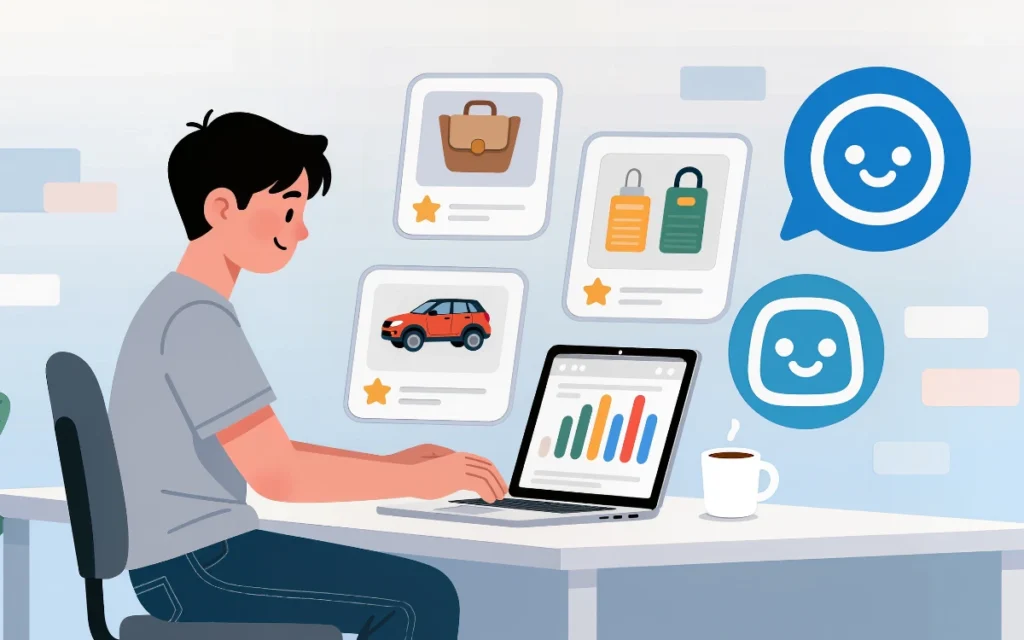
AI tools can help with:
- Expense tracking
- Invoice generation
- Tax estimation
- Fraud detection
📌 This reduces manual errors and saves hours of work each month.
6️⃣ AI for Hiring & HR Tasks
Small businesses can use AI to:
- Screen resumes
- Schedule interviews
- Answer employee questions
This is useful when you don’t have a full HR team.
7️⃣ AI for Decision-Making & Analytics
AI can analyze:
- Website traffic
- Sales data
- Customer trends
Then provide:
✔ Reports
✔ Insights
✔ Predictions
This helps you make data-driven decisions, not guesses.
Read Also :Best AI Detector Free & Premium Tools Compared (2026 Guide)
Common AI Tools Small Businesses Can Start With
You don’t need expensive software. Many tools offer free or low-cost plans.
✔ AI chatbots
✔ Email marketing tools with AI
✔ Social media scheduling tools
✔ AI design tools
✔ Website analytics with AI insights
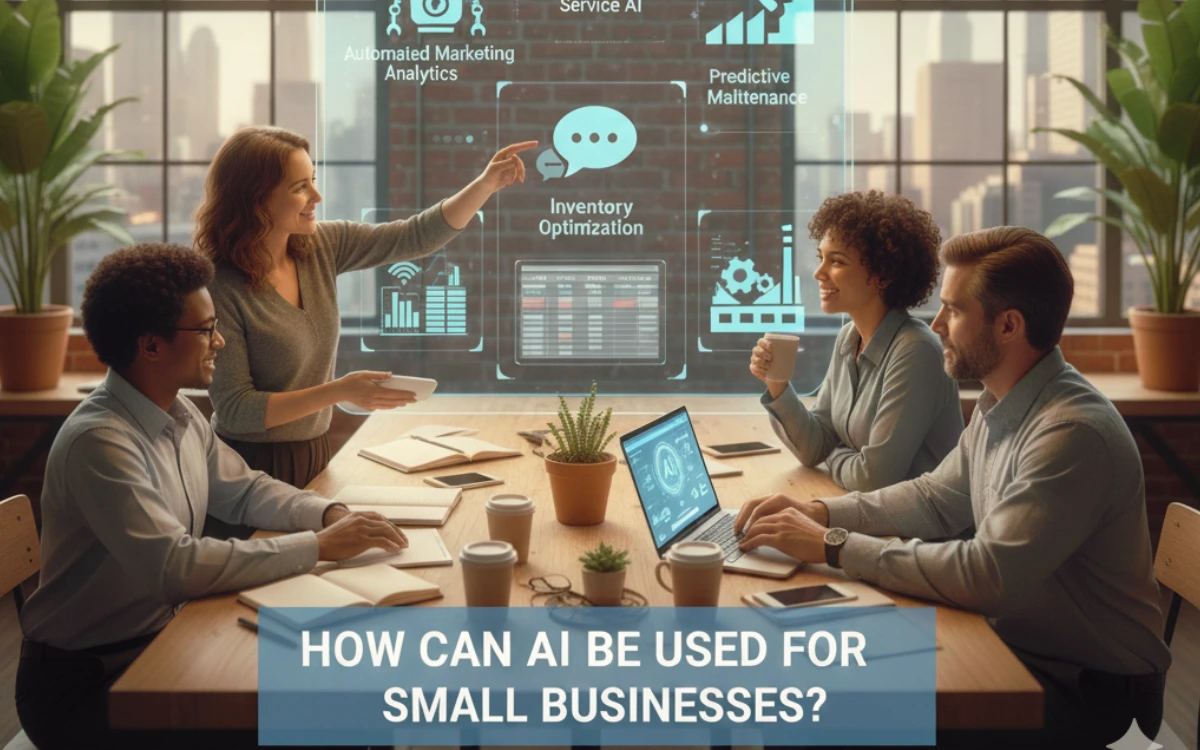
Start small and scale later. [How Can AI Be Used for Small Businesses?
What Small Businesses Should NOT Do With AI
Avoid these mistakes:
❌ Fully automate without human review
❌ Trust AI blindly for legal or financial decisions
❌ Use AI-generated content without editing
❌ Ignore data privacy rules
AI is a tool not a replacement for judgment.
Is AI Expensive for Small Businesses?
Not anymore.
Many AI tools:
- Offer free tiers
- Charge monthly subscriptions
- Are cheaper than hiring extra staff
📌 AI is now one of the most cost-effective investments for small businesses.
Frequently Asked Questions
Do I need technical knowledge to use AI?
No. Most AI tools are designed for non-technical users.
Can AI replace employees?
No. AI assists employees it doesn’t replace human creativity or decision-making.
Is AI safe for small business data?
Yes, if you use trusted tools and follow privacy best practices.
Final Thoughts: Is AI Worth It for Small Businesses?
✔ Yes – when used strategically
✔ Start small, automate simple tasks
✔ Keep humans in control
AI helps small businesses work faster, smarter, and more efficiently without losing the human touch.