My mom called me last week asking why her banking app suddenly wanted a face scan instead of her usual password. My neighbor complained about not finding a job because companies now use AI to filter resumes. My nephew’s school assignments require ChatGPT skills that neither his parents nor teachers fully understand.
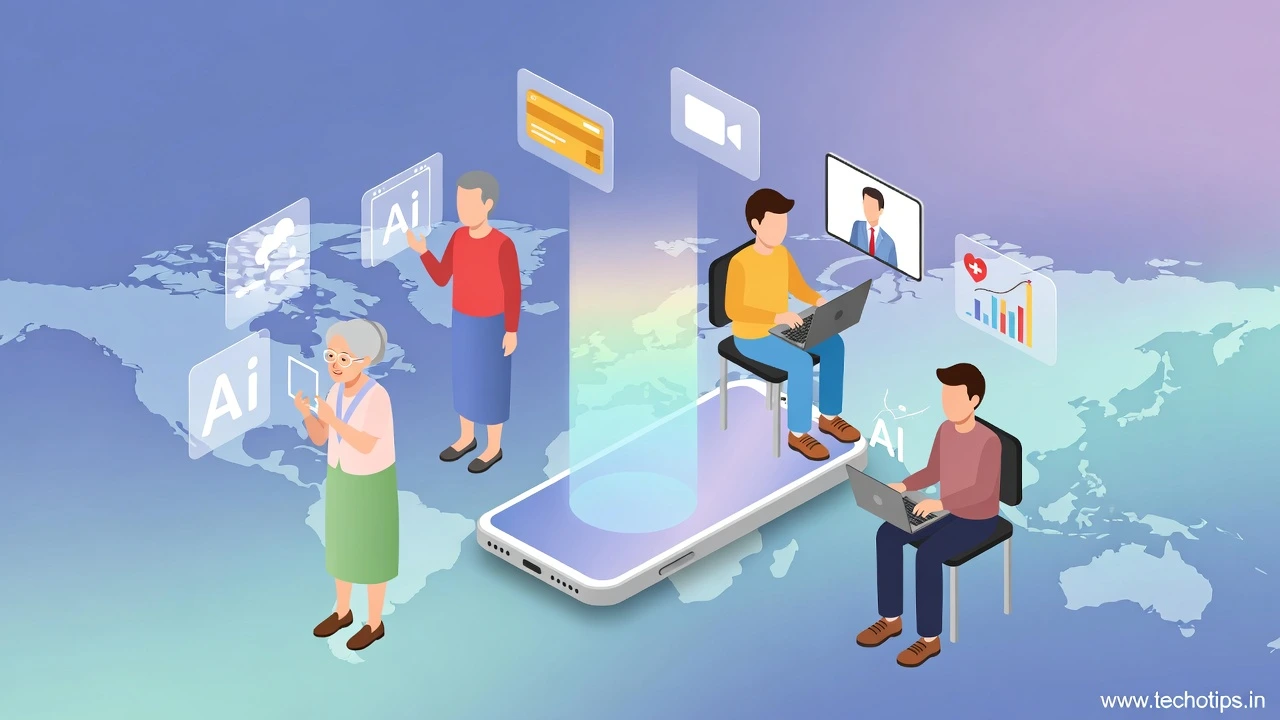
Technology trends that affect common people in the world aren’t just headlines about fancy gadgets anymore. They’re changing how we bank, work, learn, shop, and even talk to our families.
The gap between tech enthusiasts and regular people keeps growing. While some folks embrace every new trend, most people just want to understand how these changes will actually impact their daily routines without needing a computer science degree.
After watching my family and friends struggle with rapid technology changes over the past two years, I’ve learned which trends actually matter to everyday life and which ones are just hype. This guide breaks down the technology trends affecting daily life in simple terms anyone can understand.
What Are Technology Trends?
Technology trends are new innovations or ways of using technology that become increasingly popular and change how people do things.
Think of technology trends like fashion trends, but instead of changing what we wear, they change how we live, work, and communicate. Just as everyone eventually started using smartphones instead of basic phones, current trends are pushing us toward new habits and tools.
Why trends matter differently now: Twenty years ago, technology trends mostly affected tech workers and early adopters. Today, they affect everyone almost immediately. When ChatGPT launched in late 2022, within six months, students were using it for homework, workers were using it for emails, and even my grandmother was asking about it.
The acceleration problem: Technology trends used to take 10-15 years to reach everyday people. Now they reach us in months. This speed makes it harder for common people to adapt comfortably.
Why Technology Trends Matter to Common People
Understanding how technology affects common people matters because ignoring these trends creates real disadvantages in daily life.
Employment changes: Jobs that existed for decades are disappearing while new jobs requiring tech skills appear. My uncle worked as a bank teller for 20 years. His branch closed last year because most people now bank through apps. He’s struggling to find similar work because everything requires digital skills he never needed before.
Access to services: Government services, healthcare, banking, and education increasingly require smartphones and internet access. People without these tools or the knowledge to use them get left behind.
Cost of living: Technology can either save money or cost more, depending on whether you can use it. Knowing how to book flights online saves hundreds compared to travel agents. Using food delivery apps costs more than buying groceries if you don’t understand the fees and subscriptions.
Safety and privacy: Not understanding technology trends leaves people vulnerable to scams, identity theft, and privacy violations. My neighbor lost $3,000 to a scam call because she didn’t know banks never ask for passwords over the phone.
Social connections: Technology now determines how families stay connected, especially across distances. Not understanding video calls or messaging apps means missing out on seeing grandchildren or connecting with distant relatives.
Major Global Technology Trends Affecting Daily Life
These are the technology trends explained simply, focusing on what actually changes for regular people rather than technical details.
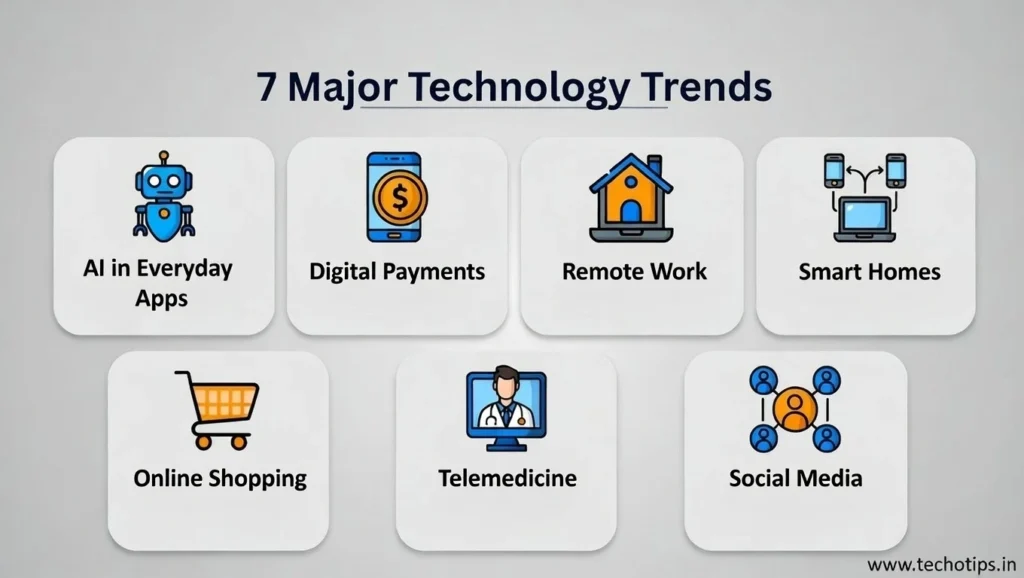
Artificial Intelligence in Everyday Apps
What it is: AI tools like ChatGPT, Google Bard, and AI features in regular apps that can write text, answer questions, and do tasks that previously required human intelligence.
How it affects you:
Customer service now uses AI chatbots instead of human representatives. Getting help sometimes means talking to a robot that doesn’t always understand your problem.
Job applications get filtered by AI before humans see them. Your resume might get rejected by a computer program, not a person.
Students use AI for homework, changing what learning and education mean. Teachers struggle to know if work is genuinely done by students.
Photo editing apps use AI to automatically improve pictures, making professional results accessible to anyone.
Real impact: My friend who runs a small business hired a virtual assistant for $5/hour. The assistant uses AI tools to handle emails, schedule appointments, and manage social media. Tasks that used to require hiring multiple people now cost almost nothing.
Digital Payments Replacing Cash
What’s changing: Physical money is becoming optional as phones and cards handle most transactions.
Impact on daily life:
Many stores now prefer or only accept card/phone payments. Some places won’t take cash at all.
Sending money to family happens instantly through apps instead of waiting days for bank transfers or mailing checks.
Street vendors and small shops that previously only took cash now accept phone payments, making it easier to buy from them.
People without smartphones or bank accounts face increasing difficulty making purchases.
Global impact: In India, even vegetable vendors at local markets accept Google Pay and PhonePe. In China, it’s almost impossible to function without WeChat Pay or Alipay. This trend is reaching every country, gradually making cash obsolete.
Remote Work and Virtual Meetings
The shift: Work that previously required office presence now happens from home through video calls and collaboration apps.
How it changes life:
Commute time eliminated for many workers, giving back hours daily for family or personal activities.
Companies hire people from anywhere in the world, increasing job opportunities but also increasing competition.
Less social interaction at physical offices affects friendships and workplace culture.
Home internet quality and having dedicated workspace become essential for employment.
Challenge for common people: Not everyone has quiet space at home for professional video calls. Not all internet connections handle video meetings well. These technology barriers create disadvantages for people in small homes or areas with poor internet.
Smart Home Devices
What’s happening: Everyday objects like lights, locks, thermostats, and appliances connect to internet and can be controlled by voice or phone.
Daily life changes:
Voice assistants like Alexa and Google Assistant control home devices, play music, answer questions, and set reminders without touching anything.
Security cameras and smart doorbells let you see who’s at home from anywhere through your phone.
Automated heating and cooling adjust based on your schedule, potentially saving electricity costs.
Elder care becomes easier as family members can remotely check if aging parents are okay through connected devices.
Accessibility benefit: For elderly people or those with mobility issues, voice-controlled devices make independent living easier. Lights turn on by voice command. Thermostats adjust without getting up.
Online Shopping and Quick Delivery
The change: Almost anything can be ordered online and delivered within hours or days, reducing need to visit physical stores.
Impact on regular people:
Grocery delivery lets busy families save time or helps elderly people who can’t easily go shopping.
Small town residents access the same products as city dwellers through online shopping.
Local small stores struggle to compete with online prices and convenience.
Delivery jobs increase, but traditional retail jobs decrease.
The trap: Technology trends affecting daily life through online shopping can create overspending. One-click buying and targeted ads make it dangerously easy to spend more than intended.
Health Technology and Telemedicine
What’s different: Healthcare consultations happen through video calls. Wearable devices track health. Apps help manage medications and appointments.
Real-world impact:
Doctor appointments for minor issues happen through phone/video without traveling to clinic.
Smartwatches detect irregular heartbeats, falls, or health emergencies and alert family or emergency services.
Prescription refills and lab results available through apps instead of calling doctor’s office.
Mental health counseling becomes more accessible and less stigmatized through online therapy platforms.
Challenge: Elderly people who struggle with technology face barriers accessing healthcare that’s increasingly digital. Phone support and in-person options are disappearing.
Read Also : Best AI Coding Tools for Developers in 2026
Social Media and Information Spread
How it affects common people:
News and information spread instantly but with less verification, making it harder to distinguish truth from misinformation.
Family events and communication happen through platforms like WhatsApp, Facebook, or Instagram. Not using these means missing out on family news.
Small businesses reach customers through social media instead of traditional advertising.
Privacy concerns as personal information gets collected and sold by platforms.
Real concern: My elderly parents believe everything they see on WhatsApp forwards, including health misinformation and political propaganda. Technology literacy becomes crucial for safety.
Benefits and Challenges of New Technology
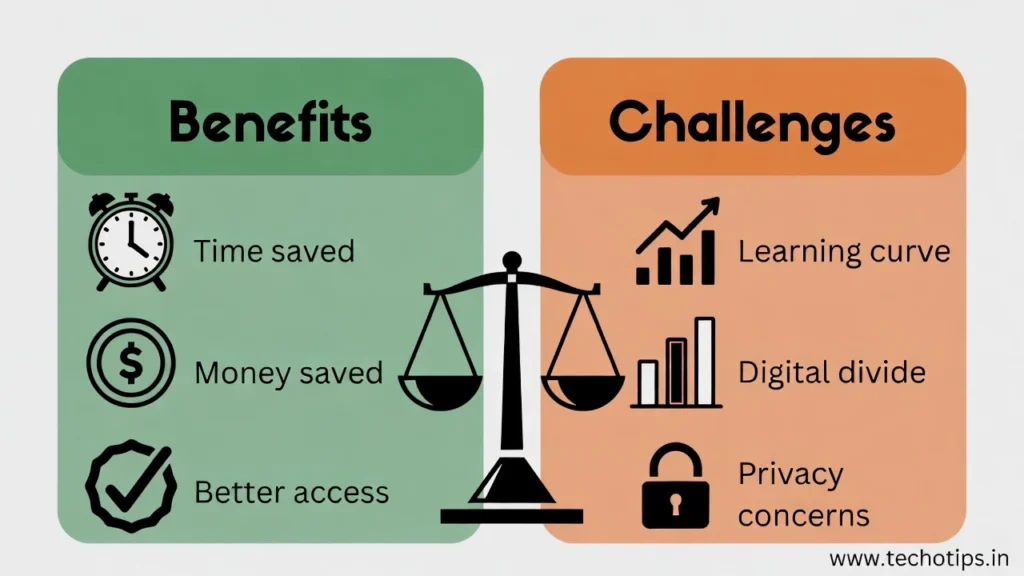
Technology trends bring both advantages and problems for everyday people. Understanding both helps you adapt better.
Benefits That Actually Help
Time savings: Online banking, shopping, and services save hours weekly previously spent traveling and waiting in lines.
Money savings: Comparison shopping online ensures better prices. Free communication apps replace expensive international calls.
Access to information: Any question can be answered in seconds through search or AI. Learning new skills happens through free YouTube tutorials.
Better healthcare: Telemedicine provides doctor access in remote areas. Wearables detect health problems early.
Global connections: Video calls keep families connected across continents for free. My friend talks to her daughter in Australia daily through WhatsApp video.
Real Challenges Common People Face
Learning curve stress: Each new technology requires learning. For people who aren’t naturally tech-savvy, constant changes create frustration and anxiety.
Digital divide: People without smartphones, internet, or technical knowledge get excluded from services and opportunities.
Privacy loss: Personal data gets collected constantly. Most people don’t understand what information they’re giving away or how it’s used.
Job displacement: Automation and AI replace jobs faster than new jobs are created, especially affecting older workers and those without tech skills.
Screen time concerns: Technology addiction affects mental health, especially in children. Family time decreases as everyone stares at screens.
Scam vulnerability: As technology advances, scams become more sophisticated. Elderly people and those less tech-savvy lose money to fraud.
How Common People Can Adapt to Tech Trends
Adapting to global technology trends for everyday users doesn’t mean becoming an expert. It means learning enough to avoid disadvantages.
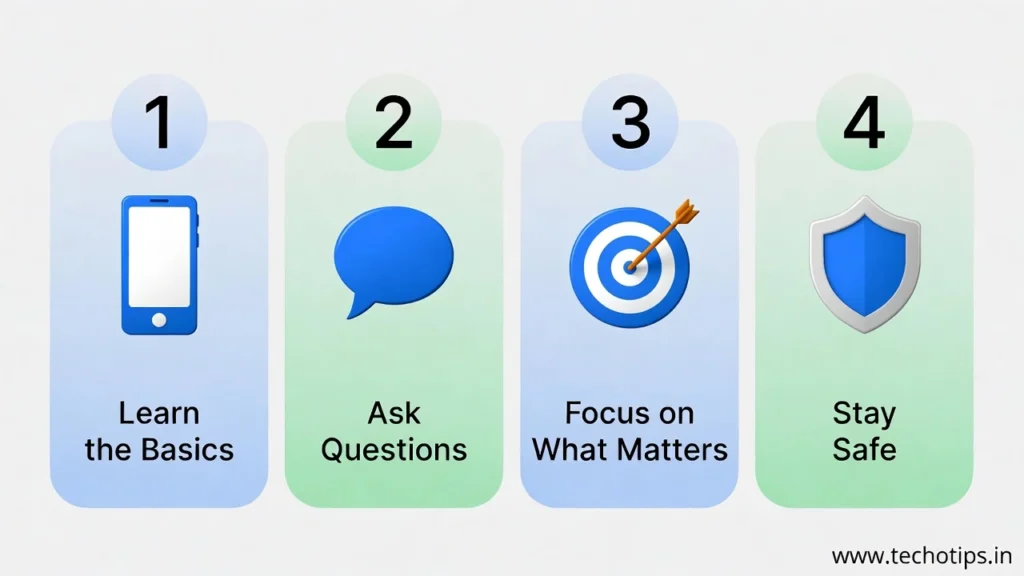
Start With Essential Digital Skills
Basic skills everyone needs:
Using smartphone for calls, messages, internet browsing, and app installation.
Online banking basics: checking balance, transferring money, paying bills.
Email for communication and receiving important documents.
Video calling to connect with family and potentially for doctor appointments or work.
How to learn: YouTube has free tutorials for seniors and beginners on every basic tech skill. Local libraries often offer free technology classes for older adults.
Ask Questions Without Embarrassment
Important mindset: There are no stupid questions about technology. What’s obvious to a 20-year-old might be completely foreign to a 60-year-old.
Who to ask: Younger family members usually help willingly. Friends who already learned similar things understand your confusion better than tech experts.
What to ask: Don’t just ask “how to do it.” Ask “why it works this way” to build understanding, not just memorize steps.
Focus on What Actually Affects You
Don’t try learning everything: Not every technology trend matters to your life. Ignore hype about things that don’t impact your daily routine.
Prioritize by need:
If you’re employed, focus on technology your workplace uses.
If you’re retired, focus on communication tools to stay connected with family and friends.
If you have health concerns, learn telemedicine and health tracking apps.
My grandmother’s approach: She ignored most technology but learned WhatsApp video calls because seeing grandchildren mattered. That’s smart prioritization.
Protect Yourself From Common Risks
Basic safety rules:
Never share passwords with anyone, even if they claim to be from your bank or government.
Don’t click links in unexpected text messages or emails.
If an offer seems too good to be true (make money fast, free expensive items), it’s a scam.
Verify before sending money to anyone online, even if the request seems to come from family.
Two-factor authentication: When available, use two-step verification for banking and email. It’s slightly inconvenient but prevents most hacking.
Use Technology to Reduce Costs
Practical money savers:
Video calls instead of expensive phone plans for international communication.
Price comparison apps before buying anything online or in stores.
Free entertainment through YouTube instead of cable TV subscriptions.
Budgeting apps to track spending automatically instead of manual record-keeping.
My neighbor’s example: She learned online grocery ordering and saves $150 monthly by comparing prices and avoiding impulse purchases at physical stores.
What to Expect in the Next 5 Years
Understanding upcoming changes helps you prepare rather than feel blindsided.
More AI in Regular Services
What’s coming: AI will handle most customer service, answer questions at government offices, and help with paperwork. Talking to actual humans for help will become rarer and sometimes cost extra.
Prepare by: Getting comfortable with typing or speaking to AI chatbots. Practice asking clear questions and describing problems specifically.
Everything Requires Smartphone
The direction: Physical cards, cash, tickets, and IDs are becoming phone-based. Governments are pushing digital identity documents.
What to do: If you’ve avoided smartphones, that time is ending. Start learning now while help is available and stakes are low.
Automation in More Jobs
Reality check: Jobs involving repetitive tasks will continue automating. Self-checkout replaced cashiers. AI will replace more administrative, data entry, and basic writing jobs.
Adaptation: Focus on skills that require human judgment, creativity, physical presence, or emotional intelligence. These are harder to automate.
Read Also : How Can AI Be Used for Small Businesses?
Healthcare Goes Digital
Next years: Regular doctor visits will decrease as wearable devices monitor health continuously. Virtual consultations will become standard, not just pandemic emergency measures.
Prepare: Get comfortable with video calls and learn to explain symptoms clearly without physical examination prompts.
Privacy Will Cost Money
Emerging reality: Free services collect and sell your data. Privacy-focused alternatives will charge subscription fees.
Decision ahead: Choose between paying for private services or accepting that free services track and monetize your information.
Final Thoughts on Technology and Common People
After watching friends and family navigate these changes, the biggest lesson is this: you don’t need to love technology or become an expert. You just need to avoid being left behind.
The impact of technology on daily life continues accelerating. Resisting it creates real disadvantages in employment, healthcare, communication, and finances. But blindly adopting everything without understanding creates different problems like overspending, scams, and privacy loss.
The middle path works best: learn the technology that directly affects your life, ignore trends that don’t matter to you personally, and always prioritize human connection over digital convenience.
Technology should serve you, not stress you. When it feels overwhelming, remember that every person now comfortable with smartphones once felt the same confusion you might feel with today’s new technologies.
Start small, ask questions freely, and give yourself permission to learn slowly. The goal isn’t keeping up with everything. It’s staying connected, informed, and capable in a changing world.
Frequently Asked Questions
How do technology trends affect common people?
Technology trends affect daily life by changing how we work, shop, bank, access healthcare, and communicate. Remote work, digital payments, AI customer service, and online shopping have become normal in just a few years. Common people must adapt to these changes to access essential services, maintain employment, and stay connected with family.
Why should non-tech people care about technology trends?
Ignoring technology trends creates real disadvantages. Jobs require digital skills, government services move online, and banking becomes phone-based. People without basic tech knowledge struggle with employment, face difficulty accessing services, and become vulnerable to scams. Understanding trends doesn’t require expertise, just enough knowledge to avoid being left behind.
What are the biggest technology trends affecting everyday life?
AI in daily apps, digital payments replacing cash, remote work becoming normal, smart home devices, online shopping with quick delivery, telemedicine for healthcare, and social media for communication and news. These aren’t future predictions they’re already changing how regular people live, work, and access services globally.
How can older people adapt to new technology?
Start with essential skills: smartphone basics, online banking, video calls, and email. Learn from patient teachers like family members or free library classes. Focus only on technology that affects your specific needs don’t try learning everything. Ask questions freely without embarrassment. Most importantly, start now while help is available rather than waiting until it’s required.
Is technology making life better or worse for common people?
Both. Technology saves time and money, improves healthcare access, and keeps families connected globally. But it also creates stress from constant changes, eliminates jobs, increases privacy risks, and creates a digital divide excluding people without tech access or knowledge. The impact depends on whether individuals can access and understand the technology affecting their lives.
What technology skills does everyone need now?
Basic smartphone use, online banking, email communication, video calling, safe internet browsing, recognizing scams, and using common apps for daily services. More advanced needs depend on employment or specific situations, but these basics help anyone function in modern society without major disadvantages.
Will technology replace all jobs?
No, but it will change most jobs. Tasks involving repetition, data entry, and basic customer service are being automated. Jobs requiring creativity, human judgment, physical presence, emotional intelligence, and complex problem-solving remain difficult to automate. Workers must focus on skills that complement technology rather than compete with it.
About the Author